theRoom.
the ROOM。
Interactive mixed-reality design
#User Research
Spatial Behavior Analysis #Visual Design
#Modeling and Rendering
Interaction Prototyping #Documentation

This project draws inspiration from the ongoing issue of women's underrepresentation in the art world. By choosing a room as the backdrop and drawing from the activities within Ray Eames' domain, artists prompt viewers to contemplate the disconnection between societal expectations and the genuine impact of women.

THE ROOM. explores the possibilities of the hallway in the 950 building, a circulation space often overlooked as a simple and ordinary passage.
I reimagined it as a dynamic environment that inspires interaction and fosters new patterns of use. By analyzing spatial behaviors and utilizing mixed-reality technologies, I aimed to redefine how people experience and navigate these shared public spaces, encouraging greater awareness and appreciation for often unnoticed spaces and events.
THE ROOM. explores the possibilities of the hallway in the 950 building, a circulation space often overlooked as a simple and ordinary passage.
I reimagined it as a dynamic environment that inspires interaction and fosters new patterns of use. By analyzing spatial behaviors and utilizing mixed-reality technologies, I aimed to redefine how people experience and navigate these shared public spaces, encouraging greater awareness and appreciation for often unnoticed spaces and events.
THE ROOM explores the possibilities of the hallway in the 950 building, a circulation space often overlooked as a simple and ordinary passage.
I reimagined it as a dynamic environment that inspires interaction and fosters new patterns of use. By analyzing spatial behaviors and utilizing mixed-reality technologies, I aimed to redefine how people experience and navigate these shared public spaces, encouraging greater awareness and appreciation for often unnoticed spaces and events.

Usage patterns shift throughout the week, with increased activity during deadlines and exam periods. Users perceive the space as a blend of a transitional corridor and an educational showcase, reflecting its multifaceted role in fostering learning, collaboration, and interaction.
Usage patterns shift throughout the week, with increased activity during deadlines and exam periods. Users perceive the space as a blend of a transitional corridor and an educational showcase, reflecting its multifaceted role in fostering learning, collaboration, and interaction.

I started by studying how people use the hallway. I installed cameras on the walls of the hallway and used this Unity I built to record them. I mainly recorded people's daily activities. I talked to people to find out where they are from, where they going to, how often they use the hallway, and what they think of it. But mostly, I just observed the direction of people's movements.
I started by studying how people use the hallway. I installed cameras on the walls of the hallway and used this Unity I built to record them. I mainly recorded people's daily activities. I talked to people to find out where they are from, where they going to, how often they use the hallway, and what they think of it. But mostly, I just observed the direction of people's movements.

Following a 24-hour test, we discovered a relationship between the time period and the movement direction and flow of persons moving through the corridor. For instance, more people will travel to the elevator at the end of class to exit, and more people will use the hallway to walk to the public area as class draws near.
Following a 24-hour test, we discovered a relationship between the time period and the movement direction and flow of persons moving through the corridor. For instance, more people will travel to the elevator at the end of class to exit, and more people will use the hallway to walk to the public area as class draws near.


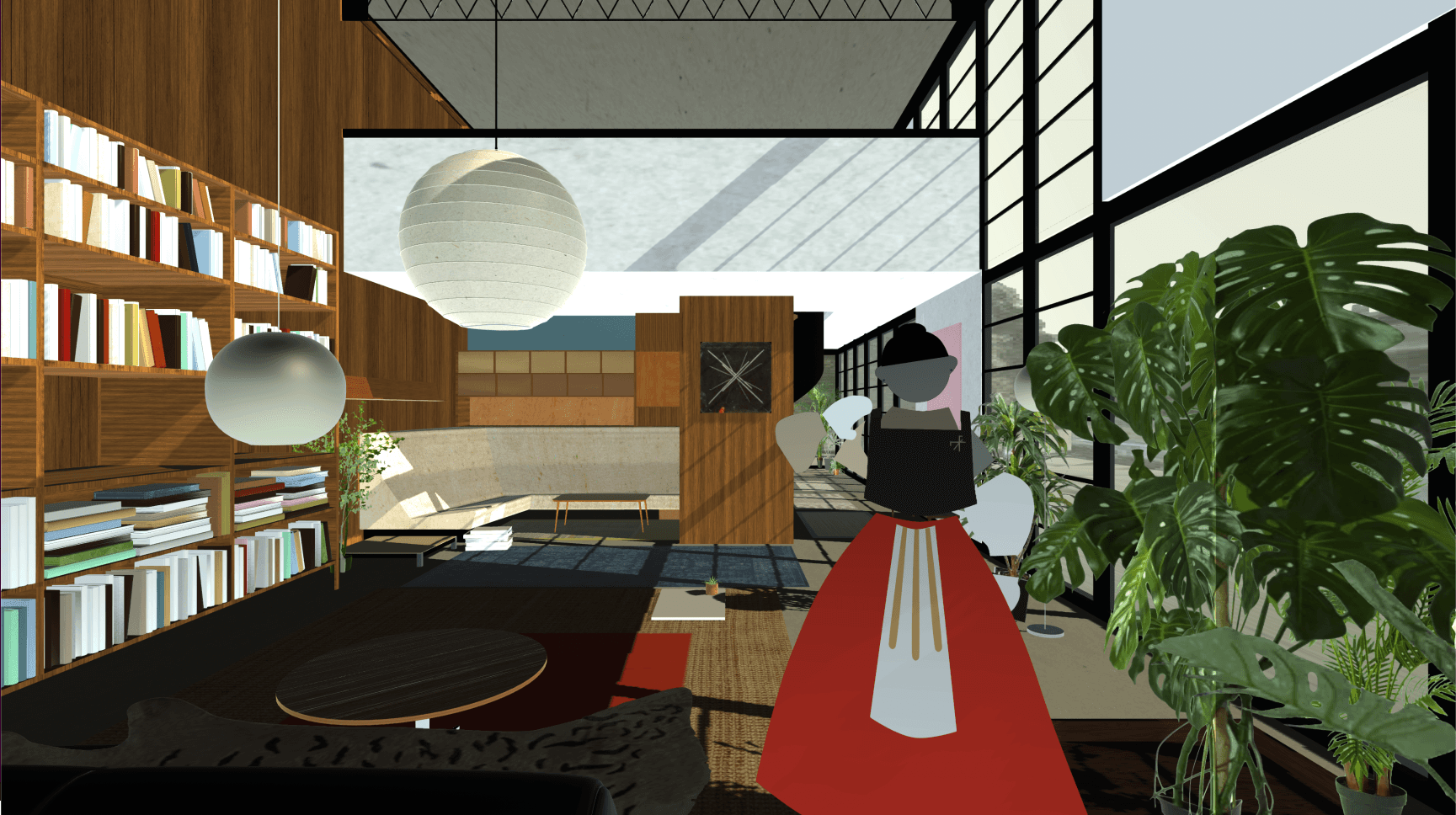
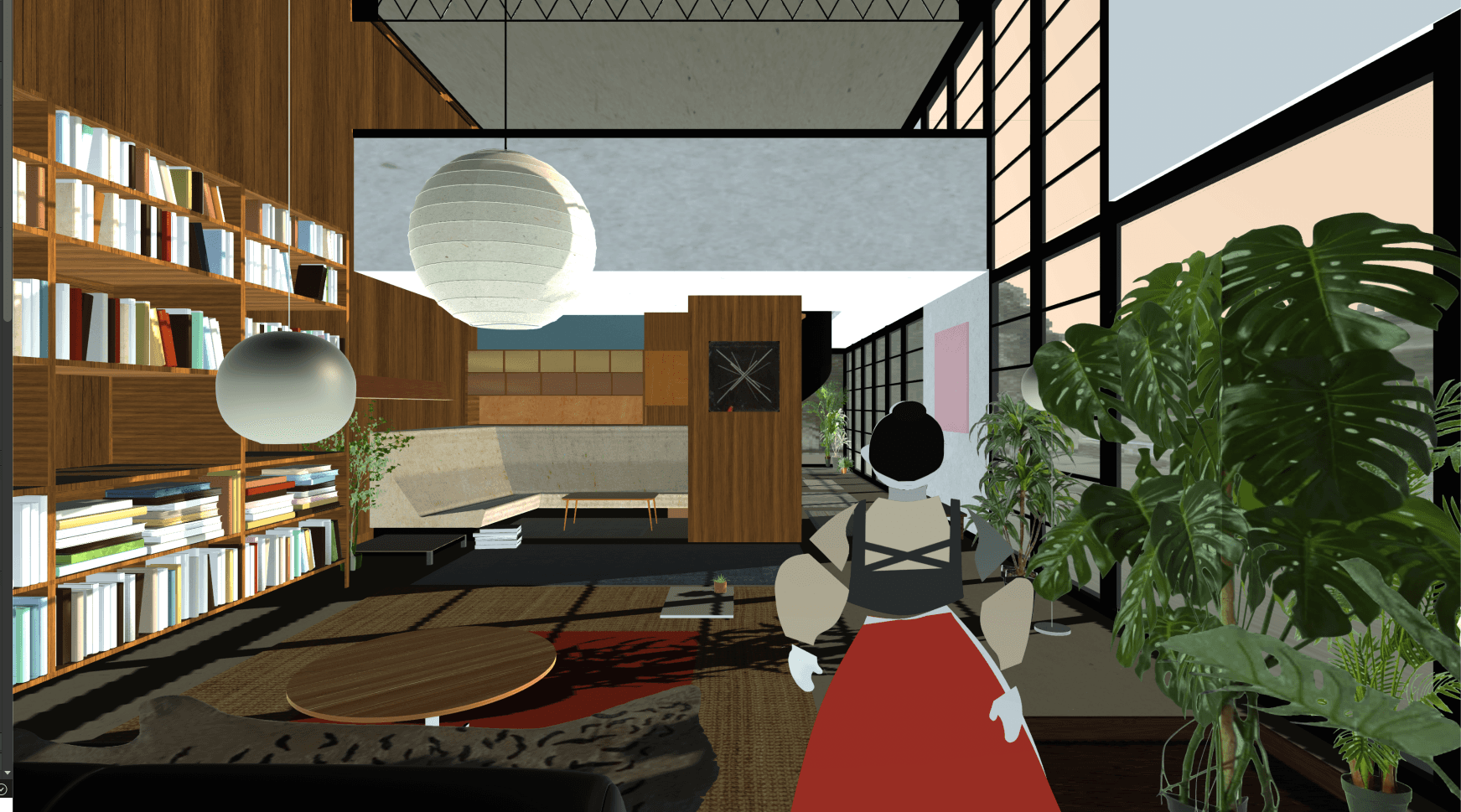

THE ROOM. explores the possibilities of the hallway in the 950 building, a circulation space often overlooked as a simple and ordinary passage.
I reimagined it as a dynamic environment that inspires interaction and fosters new patterns of use. By analyzing spatial behaviors and utilizing mixed-reality technologies, I aimed to redefine how people experience and navigate these shared public spaces, encouraging greater awareness and appreciation for often unnoticed spaces and events.
THE ROOM. explores the possibilities of the hallway in the 950 building, a circulation space often overlooked as a simple and ordinary passage.
I reimagined it as a dynamic environment that inspires interaction and fosters new patterns of use. By analyzing spatial behaviors and utilizing mixed-reality technologies, I aimed to redefine how people experience and navigate these shared public spaces, encouraging greater awareness and appreciation for often unnoticed spaces and events.