ink-%
A system where language moves.
#Media Installation #Visual Design #Physical Prototyping # Creative coding #Documentation #Graphic design #Book Design
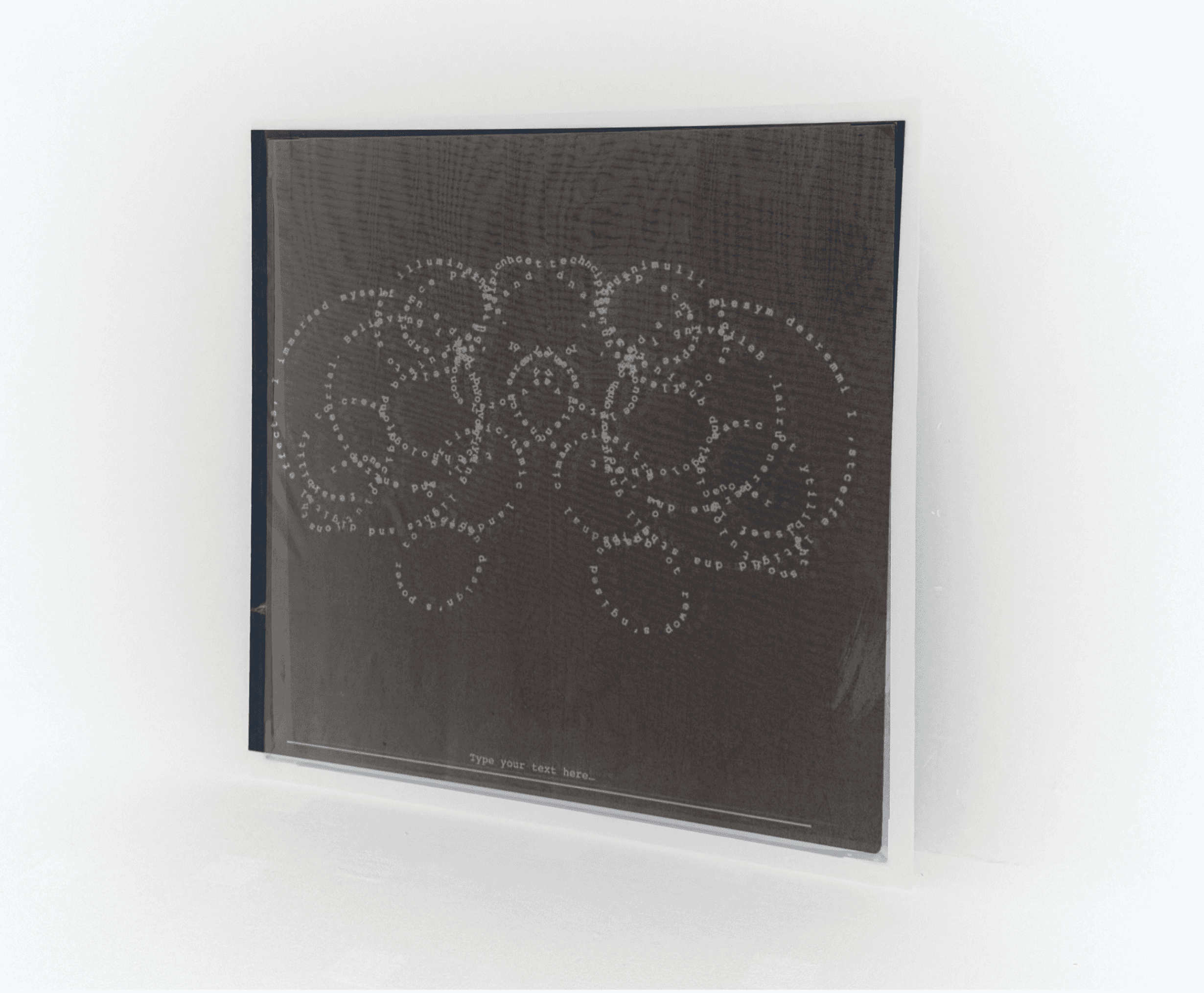
ink-negative explores the poetics of technology — the interface where language, motion, and code converge. The system turns user movement into generative typography, choreographing words in real-time. It blurs the line between writing and drawing, between reading and performing.
Poetry, typography, and even everyday writing all carry rhythm — pauses, accelerations, shifts of emphasis — that feel almost physical.
When we read, our eyes trace paths.
When we speak, our hands often move in arcs, circles, gestures that accompany meaning.
Text itself could behave like a moving body —
fluid, rhythmic, and responsive — instead of remaining a rigid, typeset object.
This question led me to imagine a system where each character could function like an anchor point in space.
Something that could be rearranged to form arcs, trajectories, and constellations.
The project became an experiment:
whether gesture could become a form of writing,
and whether computation could reveal the latent motion already inside language.
ink-negative explores the poetics of technology — the interface where language, motion, and code converge. The system turns user movement into generative typography, choreographing words in real-time. It blurs the line between writing and drawing, between reading and performing.
Title & Text Input
Start with language. ink-negative lets you input a title and body text as raw material, breaking words into individual characters that become the building blocks of spatial composition. Text is no longer static content — it is the source of form.
Start Your Design
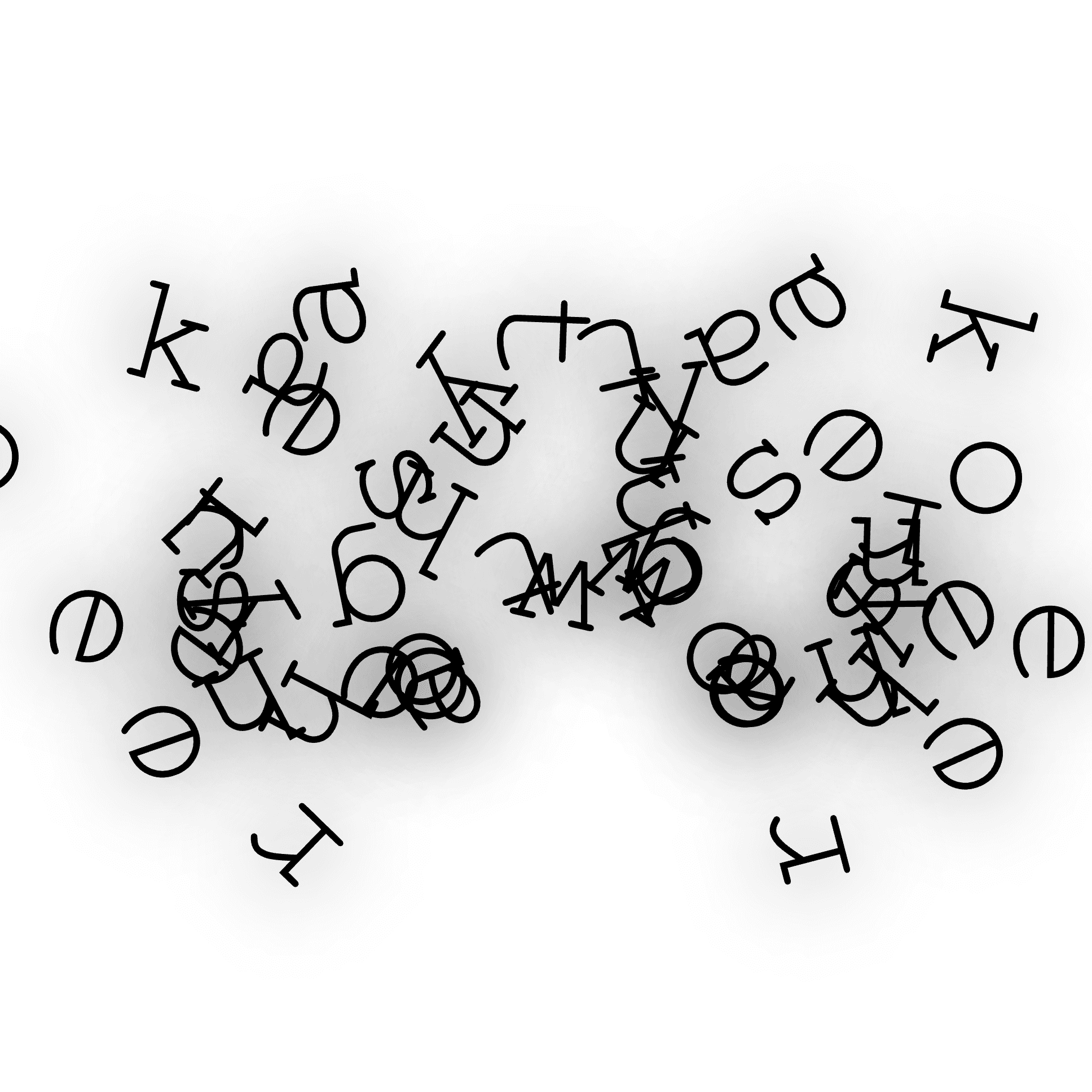
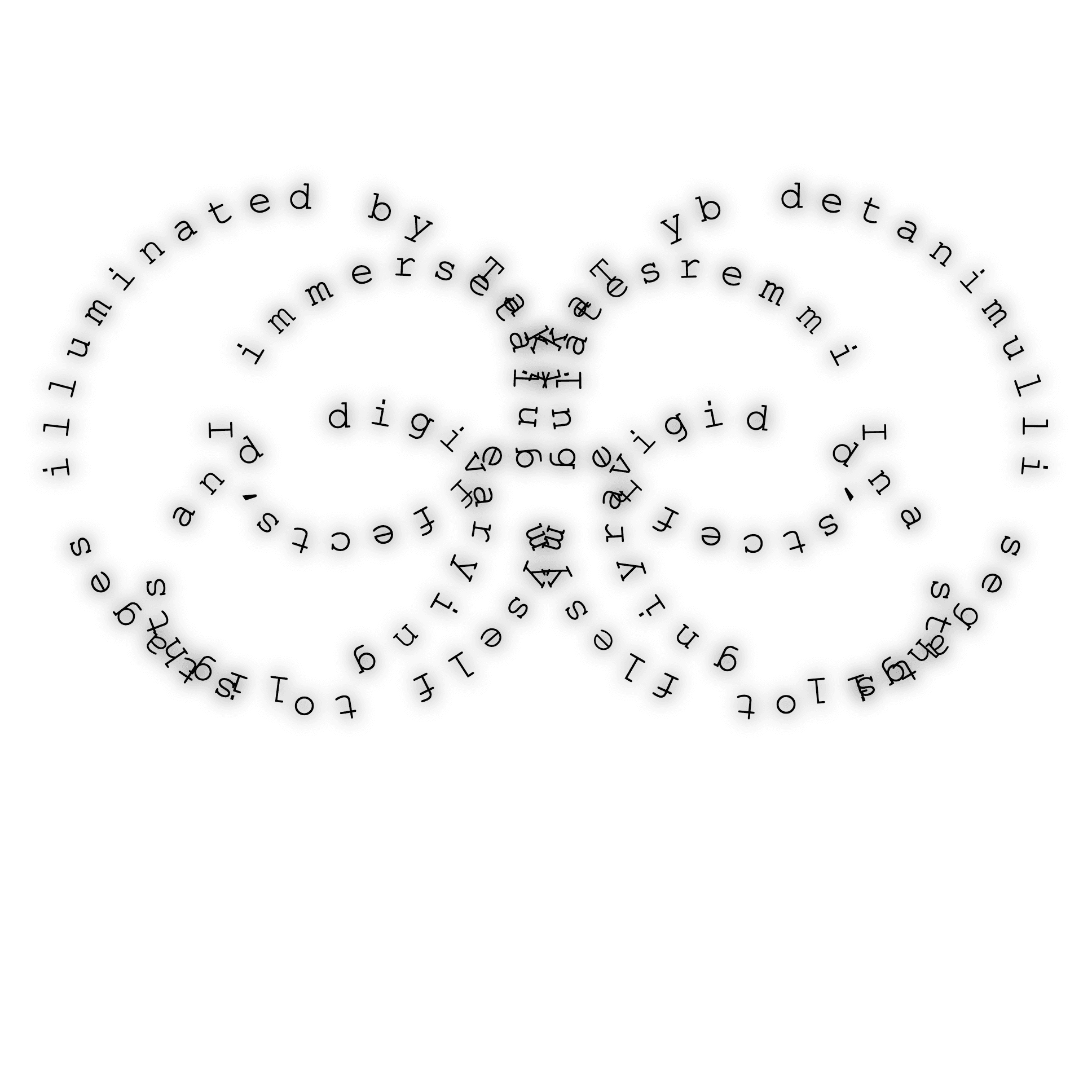
Freeze movement into structure. At any moment, you can save a form and turn it into a permanent typographic layout shape. Each saved form captures a specific rhythm, scale, and orientation — allowing compositions to grow organically over time.
Live Controls
Layouts
Export & Archive





ink-%
ink-negative explores the poetics of technology — the interface where language, motion, and code converge. The system turns user movement into generative typography, choreographing words in real-time. It blurs the line between writing and drawing, between reading and performing.


